The Gate and the Good Shepherd
A Sermon on John 10:1-18
Introduction
Every culture has its trusted voices — the ones we listen to without question, and the ones we’ve learned to be wary of. In first-century Palestine, sheep knew this instinctively. A flock could be mixed together with several others in one communal pen overnight, guarded by a gatekeeper. But when morning came, each shepherd would call out, and only his own sheep would rise and follow him out. They didn’t follow a stranger. They didn’t even follow a familiar face using an unfamiliar voice. They followed the voice they trusted.
Jesus uses this ordinary, everyday picture to say something extraordinary about Himself — and about us. In this passage He makes two claims: “I am the gate,” and “I am the good shepherd.” Together, they answer two of the deepest questions the human heart asks: How do I get in? and Who will look after me once I’m there?
I. The Warning: Not Every Voice Can Be Trusted (vv. 1-6)
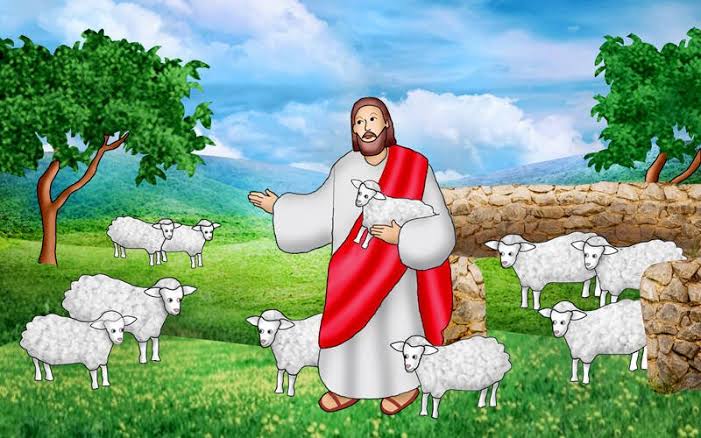
Jesus begins with a contrast. Anyone who climbs into the sheepfold some other way — over the wall, through the back — is not the shepherd. He’s a thief. He’s after something for himself, not the good of the flock.
This is a warning as relevant now as it was then. There will always be voices offering shortcuts to spiritual life, false paths that promise security but deliver exploitation. The test Jesus gives is not “does this voice sound confident” or “does this voice sound impressive.” The test is: does it enter through the proper door? Does it match the character and the way of the true shepherd?
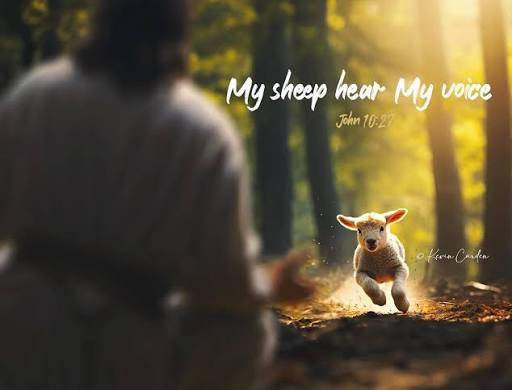
The sheep, notably, are not praised for their cleverness in spotting counterfeits. They’re simply described as sheep who know their shepherd’s voice, because they have spent time near him. Familiarity, not sharpness, is what protects them. The same is true for us. The more time we spend with Christ — in His word, in prayer, in worship — the more instinctively we recognize what does and doesn’t sound like Him.
II. “I Am the Gate” — He Is the Way In (vv. 7-10)
The disciples don’t understand the metaphor, so Jesus makes it plain: “I am the gate for the sheep.” Not a gate among several. The gate.
This is one of the most exclusive claims in all of Scripture, and it’s worth sitting with rather than softening. Jesus is saying that access to the fold — to safety, to the people of God, to eternal life — runs through Him alone. Anyone else who claims to offer entry by another route is, in His own words, a thief and a robber.
But notice what the gate offers, not just what it excludes: whoever enters through Him will be saved, will go in and out freely, and will find pasture. That’s a picture of security paired with freedom — not a cramped, fearful existence, but a flourishing one. Jesus contrasts this directly with the thief, “who comes only to steal and kill and destroy.” His own purpose, He says, is the opposite: “that they may have life, and have it to the full.”
That’s the choice this passage puts in front of every listener. Every gate you might walk through in life is either leading you toward that abundant life, or quietly stealing from you.
III. “I Am the Good Shepherd” — He Is the Care That Waits Inside (vv. 11-18)
Having established how we get in, Jesus tells us who is waiting for us once we’re there. He is not merely a gate we pass through and then are left to fend for ourselves. He is the good shepherd — and He defines “good” in a way nobody expected.
He is good because He is sacrificial. “The good shepherd lays down his life for the sheep.” Jesus contrasts Himself here with the hired hand, who runs at the first sign of danger because the sheep were never really his to begin with. A hired hand calculates risk. A true shepherd absorbs it. This is the heart of the gospel: not a distant deity managing us from a safe height, but a shepherd who walked into the wolf’s path Himself, and did not run.
He is good because He knows us personally. “I know my sheep and my sheep know me — just as the Father knows me and I know the Father.” This is staggering: Jesus compares His knowledge of us to the intimacy shared within the Trinity itself. You are not a face in a crowd to Him. You are known.
He is good because His care is wider than we expect. “I have other sheep that are not of this sheep pen. I must bring them also.” Even here, at His most tender, Jesus is not sentimental in a narrow way — He is already looking toward those not yet gathered in, anticipating a flock that will one day be one.
And He is good because His sacrifice was chosen, not forced. “No one takes it from me, but I lay it down of my own accord.” The cross was not an accident that overtook Jesus. It was a decision He made, in love, with full authority to do otherwise. That’s what makes His death a gift rather than a tragedy.
Application
This passage leaves us with two questions worth carrying out the door today.
First — whose voice are you following? Not every voice calling for your trust, your time, or your allegiance is safe, however confident it sounds. The way to recognize the true Shepherd’s voice is not through clever discernment techniques, but through nearness — through actually spending time where He speaks.
Second — have you entered through the gate? There is a temptation to try to construct our own way into peace with God — through good behavior, achievement, or simply avoiding the question. Jesus doesn’t offer Himself as one path among many. He offers Himself as the way in, and on the other side of that gate is not restriction, but life to the full.
Conclusion
A sheep doesn’t survive by its own strength, speed, or cunning. It survives because of who is watching over it. The comfort of this passage is not that we’ve become strong enough to protect ourselves — it’s that we belong to a shepherd who already laid down His life so that we wouldn’t have to fear the wolf, the thief, or the hired hand who runs away.
He is the gate. Come in and find safety. He is the good shepherd. Stay near, and you will be known, kept, and led — not toward mere survival, but toward life, full and overflowing.
“My sheep listen to my voice; I know them, and they follow me.” (John 10:27)