
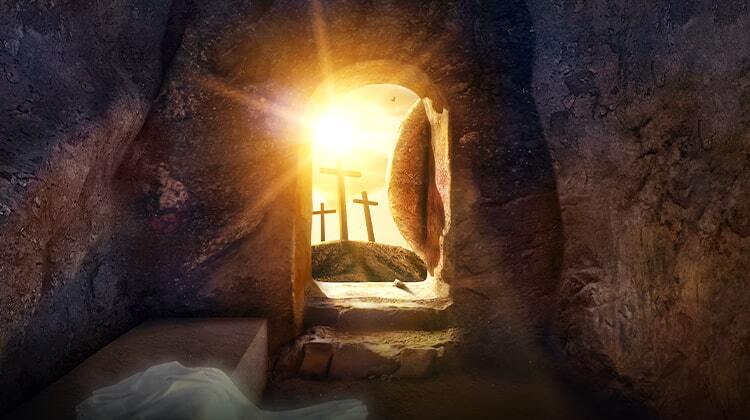
Jesus, the Resurrection and the Life
A Sermon on John 11:6-44
Introduction
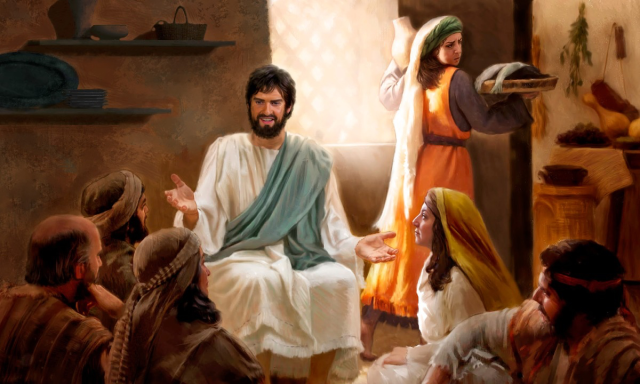
There is a particular kind of pain that comes from waiting on someone who could have helped, and didn’t come in time. Mary and Martha know that pain intimately. They sent word to Jesus that their brother Lazarus was sick — a message that assumed urgency, that assumed He would come at once. Instead, John tells us plainly: “when he heard that Lazarus was sick, he stayed where he was two more days.” By the time Jesus arrives, Lazarus has been dead four days. Buried. Sealed in a tomb. Grieved over by a house full of mourners.
This passage is not a tidy story about a delay that turns out fine. It’s a story that sits honestly inside real grief, real disappointment, and real confusion about God’s timing — before it becomes one of the clearest revelations in Scripture of who Jesus actually is.
I. The Delay That Wasn’t Neglect (vv. 6-16)
Jesus’ own explanation is startling: “This sickness will not end in death. No, it is for God’s glory, so that God’s Son may be glorified through it.” And yet — Lazarus does die. Jesus isn’t denying the reality of death; He’s reframing what death will ultimately mean in this story. The delay wasn’t neglect. It was intention.
This is hard news to sit with, because it means some of our own unanswered prayers, some of our own “why didn’t you come sooner, Lord” moments, may also be intentional rather than accidental — even when we can’t yet see the purpose. Jesus loved Martha, Mary, and Lazarus (v. 5) — the text is explicit about that — and He still let Lazarus die. Love and delay are not opposites in God’s hands, even though they feel that way in ours.
II. Martha’s Complaint and Her Confession (vv. 17-27)
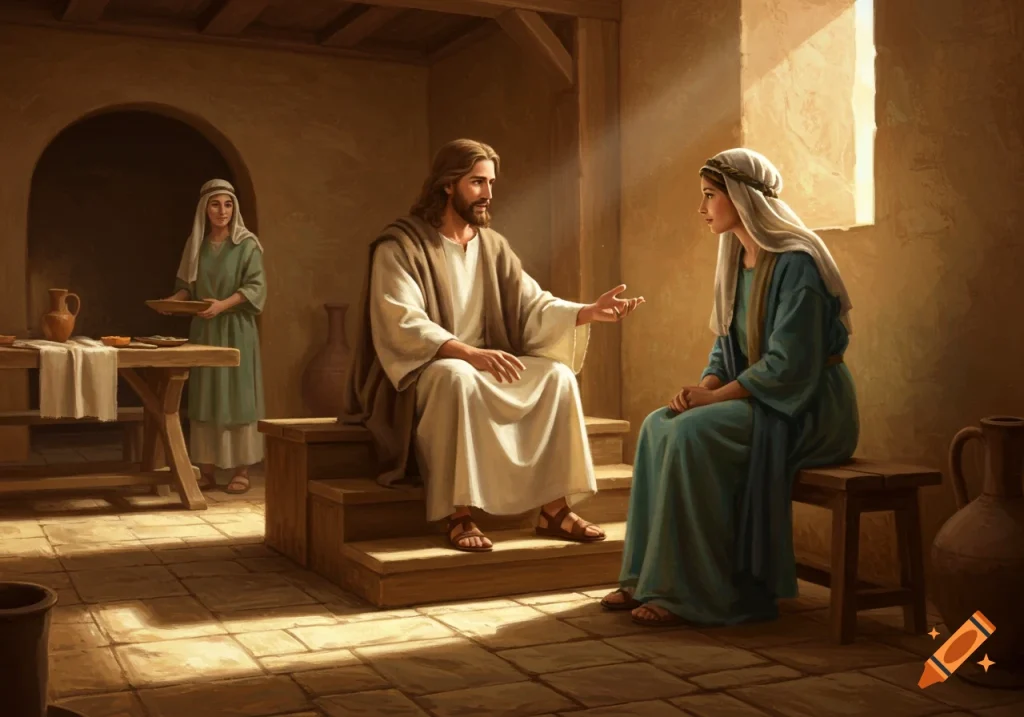
When Jesus finally arrives, Martha meets Him with words that are half grief, half accusation: “Lord, if you had been here, my brother would not have died.” It’s honest. It’s the kind of thing we say to God when we’re hurting and trying to hold faith and disappointment in the same sentence.
Jesus doesn’t rebuke her for it. He meets her there, and makes a claim that reframes everything: “I am the resurrection and the life. The one who believes in me will live, even though they die; and whoever lives by believing in me will never die.” This isn’t a promise about someday, off in the distant future. Jesus is saying that resurrection is not simply an event to wait for — it’s a person to know, standing in front of her.
Martha’s response is one of the great confessions of the Gospels: “Yes, Lord, I believe that you are the Messiah, the Son of God.” She doesn’t fully understand what’s about to happen. But she trusts who is standing in front of her.
III. Jesus Weeps (vv. 28-37)
Then Mary comes, repeats her sister’s same painful line — “Lord, if you had been here” — and this time, Jesus doesn’t respond with theology. He responds with grief. Seeing her weep, and the mourners weeping with her, He is described as being “deeply moved in spirit and troubled.” And then: the shortest, most quoted verse in Scripture — “Jesus wept.”
This matters more than its brevity suggests. Jesus already knows He is about to raise Lazarus. He is not weeping from uncertainty about the outcome. He weeps anyway. Grief, in the presence of Jesus, is not a lack of faith. He grieves alongside people even when He already holds the solution in His hands. That’s worth remembering the next time we assume that trusting God means we’re not allowed to cry.
IV. “Take Away the Stone” (vv. 38-44)
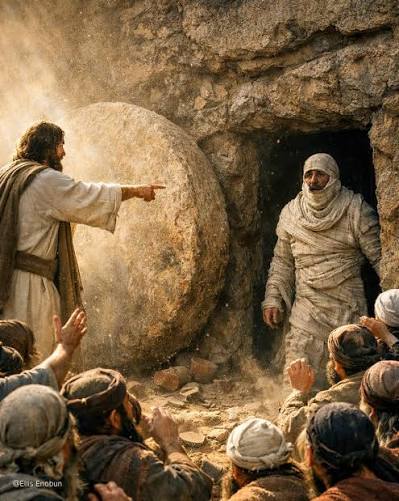
At the tomb, Jesus gives an instruction that seems almost unnecessary for someone about to perform a miracle: “Take away the stone.” Martha objects — by now, there will be a bad odor; four days is enough time for decay to set in. Jesus reminds her: “Did I not tell you that if you believed, you would see the glory of God?”
The stone comes away. Jesus prays aloud — not to convince God, but so the crowd around Him will know the power that follows comes from the Father. Then He cries out with a loud voice: “Lazarus, come out!”
And he does. Bound in graveclothes, unable to fully move on his own, Lazarus walks out of death itself at the sound of Jesus’ voice. Jesus’ final instruction is deeply practical and deeply tender: “Take off the grave clothes and let him go.” The miracle raises him; the community around him helps him walk free.
Application
First — the stone still has to be moved. God’s power doesn’t always bypass human obedience; sometimes it works through it. Jesus could have moved the stone Himself. He asks the people present to do it. There are places in our own lives where we are waiting for God to act, when He is waiting for us to do the small, obedient thing in front of us — open the door He intends to walk through.
Second — Jesus meets grief with grief before He meets it with power. If you are in a season of loss and confusion about God’s timing, this passage doesn’t rush you past that. Jesus doesn’t either. He stands at the tomb and weeps before He does anything else.
Third — resurrection is a person, not just an event. Martha believed in a future resurrection “at the last day,” as many of us do. Jesus corrects the timeline, not the theology: eternal life doesn’t only begin later. It begins now, in relationship with Him, and death does not get the final word over anyone who belongs to Him.
Conclusion
Lazarus would, eventually, die again. This miracle was not a permanent solution — it was a sign, a preview of a resurrection greater and final, which Jesus Himself would walk through only days later. Every stone rolled away in this Gospel points toward one final stone, rolled away from a different tomb, where Jesus Himself would not simply raise the dead, but rise from death permanently.
Whatever tomb you are standing in front of today — a relationship, a dream, a grief, a delay you don’t understand — the same voice that called Lazarus by name is still speaking. And graveclothes, in His presence, are never the final word.
“I am the resurrection and the life. The one who believes in me will live, even though they die.” (John 11:25)